
How To Make Sure A Bunk Bed With Stairs Is Safe?
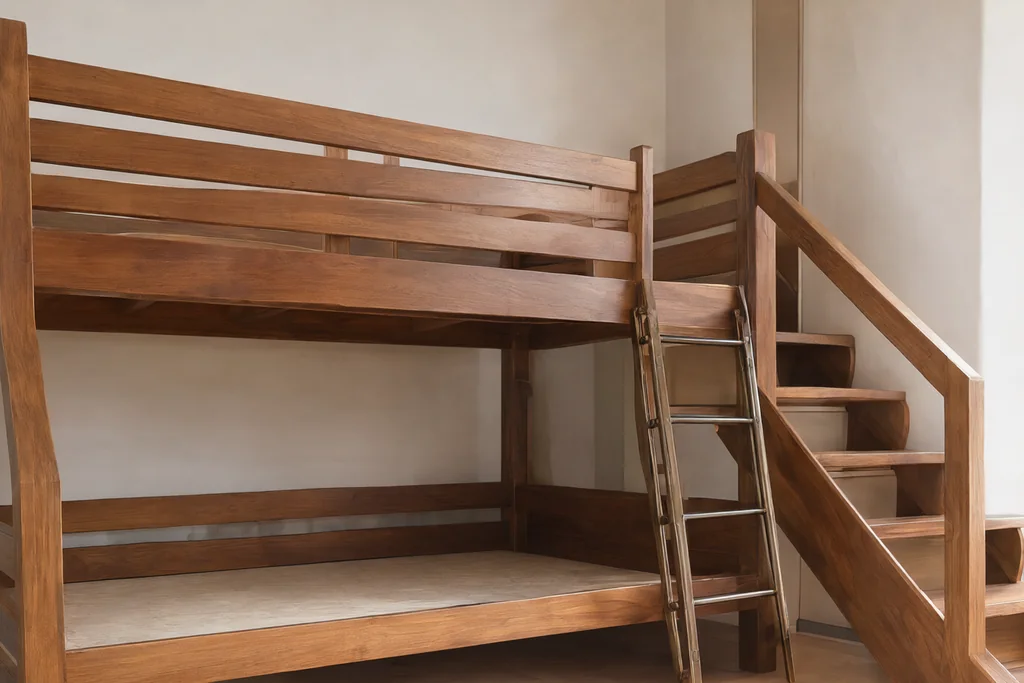
A bunk bed with stairs buys floor space and gives children a den, but the safety of the arrangement depends on a handful of fittings that are easy to overlook in a showroom. Check them before the first night, not after the first fall.
Sturdiness before anything else
Check the structure before allowing children to use it. The bunk bed should be securely fastened to the wall, and the stairs should be firmly attached to the bed rather than resting against it. Look for wobbling and loose joints, and confirm that the frame can support the weight of the children who will actually sleep on it, which is usually more than the weight of one child sitting still. A bed that shifts when a child climbs is telling you something.
Height and headroom
Bunk beds with stairs can be quite high, so consider the height of the bed before a child uses it. The top bunk should sit low enough that a child can get in and out safely, and there should be enough room for a child to sit upright up there without hitting their head on the ceiling. Both measurements are easy to take with a tape before purchase and hard to fix afterwards.
Guardrails and the stair opening
Guardrails are an essential safety feature and the most commonly neglected one. They must be securely attached to the top bunk and extend far enough to stop a child rolling out during sleep, which means the gap at the stair opening needs particular attention. A guardrail that stops short of the corner leaves exactly the space a sleeping child will find. Consider guardrails along the stairs as well, so that climbing up or down at night has something to hold.
The ladder, the steps and the mattress
The ladder is part of the furniture, not an accessory, so check that it is secure and stable, firmly attached to the bed, and free of loose rungs or steps. It should be the right size for the children who will use it, and the steps should not be so steep that a small foot cannot find them in the dark.
The mattress matters just as much:
- The correct size for the frame, with no gaps at the edges
- Firm enough to support a sleeping child properly
- Not so soft that a child sinks and risks suffocation
- Not so hard that the child cannot settle or sleep
- Replaced when it loses shape rather than patched
A mattress that is too soft raises the risk of suffocation, while one that is too hard causes discomfort and makes it difficult for children to fall asleep. The right balance is a firm surface that still lets a child settle.
The safety checklist
| Check | What good looks like | Risk if ignored |
|---|---|---|
| Wall fixing | Frame anchored, no movement | Bed shifts or tips |
| Stairs | Firmly attached, no wobble | Detachment mid climb |
| Guardrails | Full length, including the opening | Falls during sleep |
| Ladder | Secure with even steps | Slips and missed footholds |
| Mattress | Correct size and firm | Gaps and suffocation risk |
None of these checks takes long, and all of them are cheaper than an accident. Re-check the fittings every few months as well, because children grow, beds get climbed on and hardware works loose.
Read next
Ferretti Yachts: Craftsmanship Redefined
What sets a Ferretti apart: hull design, joinery, materials and the yard tradition behind the name. That word is easy to print and harder to explain.
Myths Debunked About Airbnb Management Companies
Short-let management is a young industry built on a simple promise: you own the flat, someone else handles the guests. Both help, and neither is unlimited.
Basic Passenger Etiquette When Using a Chauffeur Service
Simple, practical manners that make a booked car journey smoother for everyone. What follows is practical rather than formal. The guide explains what to.